
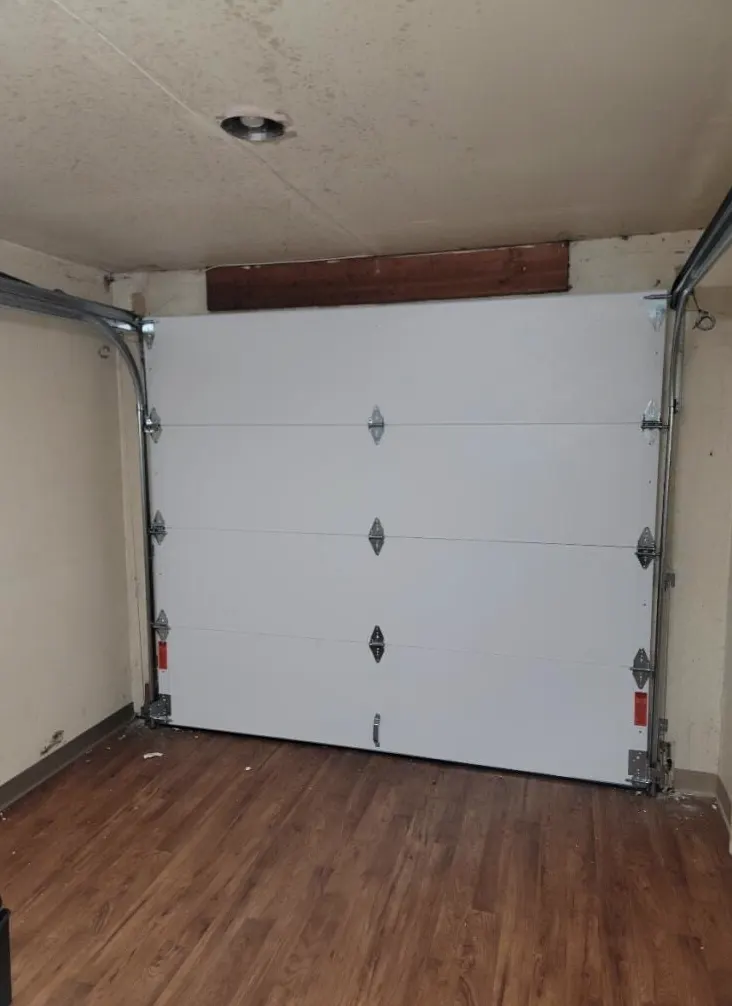
You're standing in the garage grabbing something out of the freezer, and you feel it: a thin line of cold air sliding in along the bottom of the door. Or maybe it's the opposite problem in July, when the garage feels like an oven and that heat seems to be creeping into the laundry room wall. One of you says, "That's just how garages are." The other says, "That's why our bill went up fifty bucks." Here's the plain-language version of who's right.
What's Actually Happening at That Door
A garage door is the biggest moving opening in your house, and it's sealed with rubber and vinyl parts that wear out — the bottom astragal, the side and top weatherstripping, and sometimes a threshold seal. When those seals flatten, crack, or pull away from the track, they stop doing their one job: blocking air exchange between outside and the garage interior.
On a 90650-area winter night with rain blowing sideways, that gap lets in cold, damp air. In summer, it lets in heat radiating off the driveway and dry, dusty air during Santa Ana conditions. Either way, the garage stops acting like a buffer space and starts acting like an open window.
Why This Matters More When the Garage Is Attached
A detached garage leaking air just means your tools get a little colder or hotter. An attached garage is different — it usually shares at least one wall, and often a ceiling, with living space. Many homes in this area also route HVAC ductwork through the garage ceiling, and the door to the house from the garage is rarely sealed as tightly as an exterior door.
So the sequence looks like this: outside air leaks in around the garage door → the garage itself swings closer to outdoor temperature → that temperature difference pushes through the shared wall, the door to the house, and any ductwork running through the garage → your furnace or AC runs longer to compensate in the rooms next door. You don't feel a draft in the kitchen, but the thermostat is working harder than it should to fight a battle happening one room away.
The Simple Math That Settles the Argument
Nobody needs a degree in building science for this one. Heat moves from warm to cold, always, through any gap or thin material available. A garage door with failed weatherstripping can leave a gap along the bottom edge wide enough to see daylight through, or wide enough to fit a pencil in. Multiply that gap across the full width of a two-car door, add gaps at both sides and the top, and you've got a continuous vent connecting your garage to the outdoors.
That doesn't mean the garage door is responsible for your entire utility bill — plenty of other things factor in, like attic insulation, window seals, and how often doors to the house get left open. But if the garage shares a wall with a bedroom or the laundry room, and that door hasn't been resealed in years, it is absolutely a contributor. The spouse who feels the draft is onto something real; the spouse who says "it's just a garage" is underestimating how connected that space is to the rest of the house.
Signs the Garage Door Is Part of the Problem
- Daylight visible around the edges or bottom when the door is closed
- Weatherstripping that's cracked, flattened, or peeling away from the bottom bar or door frame
- A noticeable temperature swing in the garage compared to outside — if it should feel cooler than a hot afternoon and doesn't, air is getting in
- Dust or fine grit collecting just inside the door after dry, windy days, which usually means air (and dust) is finding its way through gaps
- Water intrusion or a damp line along the garage floor after heavy winter rain, which points to the same sealing failure that lets heat and cold through
- Rooms next to or above the garage that run noticeably colder or warmer than the rest of the house
What You Can Check Tonight, No Tools Required
- Close the door and look for light. Turn off the garage light during the day and look for daylight lines around the perimeter. Any visible gap is air moving freely.
- Run a hand along the bottom seal. It should feel pliable and make full contact with the floor across the whole width. If it's stiff, cracked, or doesn't touch the ground evenly, it's not sealing.
- Check the side and top weatherstripping. Look for sections that have pulled out of the track, shrunk, or gone brittle — common after years of inland heat exposure.
- Feel for drafts at the panel seams. Older steel doors, especially non-insulated ones, can transfer temperature directly through the metal even with good weatherstripping, which is a separate issue from sealing.
- Check the door-to-house entry. If that door doesn't have its own weatherstripping and a working sweep, it's its own leak point regardless of what's happening at the garage door.
When to Call Norwalk Garage Door Co
If the bottom seal is shot, the side weatherstripping has pulled loose, or the door itself is an older uninsulated panel letting heat and cold transfer straight through the steel, that's beyond a weekend fix. Norwalk Garage Door Co handles this as part of routine Garage Door Maintenance calls — replacing worn seals, adjusting the door so it closes flush against the frame, and checking whether the panels themselves need attention. If the door is old enough that sealing it properly isn't realistic anymore, we also handle Garage Door Installation with insulated, better-sealing models that make a real difference in a garage sharing walls with living space.
Either way, you'll walk away with an actual answer instead of a guess — which, let's be honest, is what this argument was really about.
If your garage door is leaking air, water, or both, call Norwalk Garage Door Co for service anywhere from Norwalk to Cerritos, Downey, Santa Fe Springs, La Mirada, Whittier, Bellflower, and Lakewood. We'll tell you straight whether it's a seal job or something bigger.