
The First Cold Morning You Notice Something's Off
You hit the opener button on a damp, chilly morning and the door groans, hesitates, or jerks partway up before continuing. Maybe you spot a thin line of daylight under the bottom panel that wasn't there in August, or the garage smells faintly musty for the first time all year. These small signals show up right as the weather turns, and they're your cue that the door spent a long dry summer collecting dust and wildfire ash in places you can't see, and it's not quite ready for months of rain.
Check the Weatherstripping Before the Rain Does It For You
The rubber seal along the bottom of the door and the vinyl strips on the sides do the real work of keeping wind-driven rain and runoff out of your garage. After a hot, dry summer, this material often cracks, stiffens, or shrinks away from the frame. Run your hand along the bottom seal and the side tracks:
- If the rubber feels brittle or cracked, replace it now rather than after the first storm floods the slab.
- Gaps at the corners let water pool against the door and, over time, warp a wood panel or rust steel hardware.
- Side and top weatherstripping (if your door has it) should sit flush against the frame with no daylight showing through.
Replacement seal is inexpensive and a reasonable DIY job, but if the track itself is bent or the door isn't sitting square in the opening, that's a sign to have it looked at rather than just swapping rubber.
Clear Out the Summer Dust Before It Turns to Grime
Dry season dust and the occasional wildfire smoke haze settle into the tracks, rollers, and hinges over months without much rain to wash them out. Once winter rain starts, that dust mixes with moisture and turns into a gritty paste that grinds down rollers and resists smooth movement. Before the rain starts in earnest:
- Wipe down the tracks with a dry cloth, then a lightly damp one. Avoid hosing them out.
- Lubricate rollers, hinges, and the torsion spring with a garage-door-specific lithium or silicone spray — not WD-40, which attracts more dust than it repels.
- Check that rollers spin freely and aren't chipped or flat on one side, especially on older doors that have run through a few dry/wet cycles already.
Cold Metal Changes How Your Springs Behave
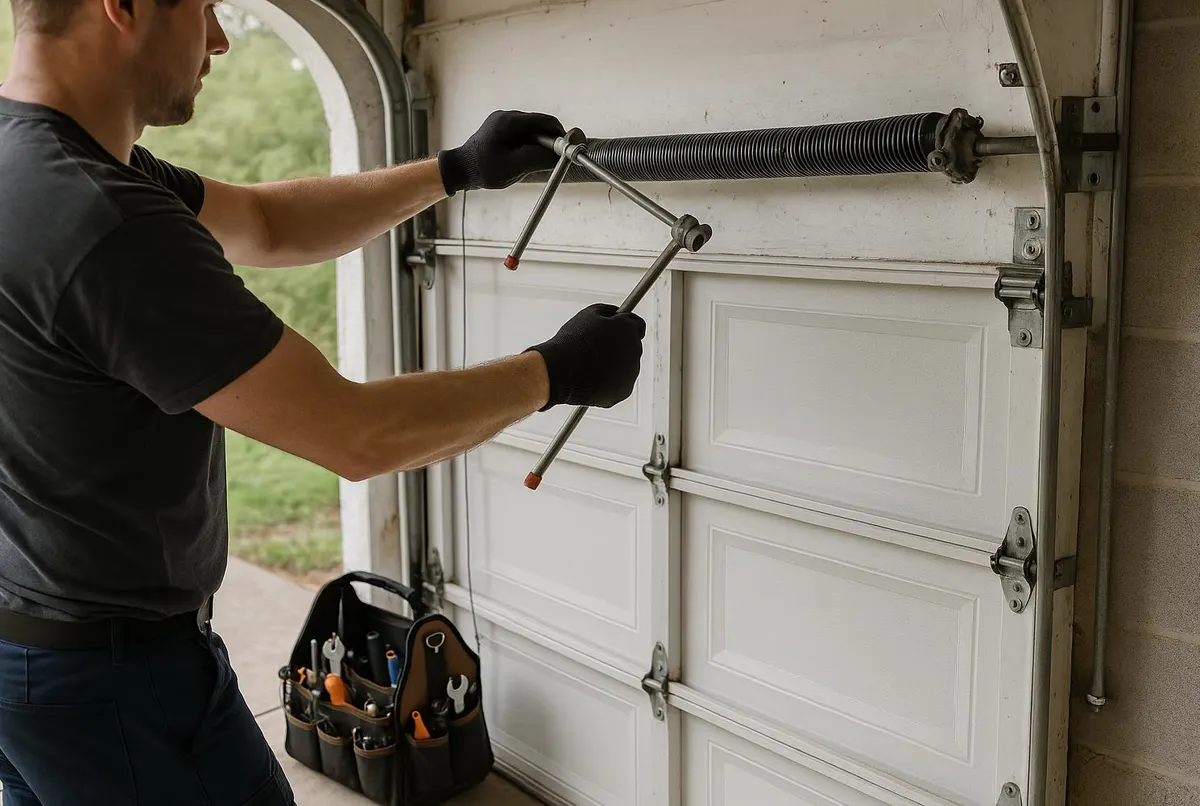
Torsion and extension springs lose a bit of tension as temperatures drop, which is part of why a door can feel heavier or move slower on a cold morning. If your door was already due for spring replacement, winter is when marginal springs tend to finally give out, often with a loud bang from the garage rather than a gradual warning. A simple balance test tells you where you stand: disconnect the opener, lift the door halfway by hand, and let go. It should hold its position. If it drops or shoots up, the springs are compensating poorly and shouldn't be left alone through a season of extra lifting cycles as the door gets used more during shorter, wetter days.
Don't Overlook the Opener
Winter storms in this area mean occasional power blips, and a garage door opener with a dead battery backup is a problem the moment you actually need it — usually in the rain, with your hands full. Test the battery backup function now, and while you're at it, check that the photo-eye sensors near the floor are clean and properly aligned; condensation and splashback from rain are enough to throw off a sensor that's already sitting slightly crooked.
Where Earthquake Retrofit Hardware Fits In
If your garage door was retrofitted with reinforced brackets or strapping as part of a broader earthquake retrofit, it's worth a quick visual check each fall. Hardware that's been fine for years can loosen slightly with repeated door cycles, and you want that reinforcement doing its job quietly in the background, not revealing a problem during storm season when you're least able to deal with it.
When to Call Norwalk Garage Door Co
If your balance test fails, the door is noticeably heavier than it used to be, or weatherstripping replacement turns up a bent track or rusted hardware underneath, it's time to call in a technician rather than keep patching things yourself. Our Garage Door Maintenance service covers exactly this kind of pre-winter tune-up — lubrication, hardware inspection, sensor alignment, and a full balance check — and if a spring or opener component needs replacing, our Garage Door Spring Replacement and opener repair teams handle that the same day in most cases.
Don't wait for a storm to find the weak spot in your garage door. Call Norwalk Garage Door Co today and get your door squared away before the rain settles in for the season.